Assess the program.
Review a facility, staffing responsibilities, procedures, and current safeguards to identify gaps and practical priorities.
Understand the gaps, compare practical options, and give your people a plan they can use. SSEI helps leaders connect security decisions to daily operations and responsible spending. Our developing SSEI SECURE assessment platform helps structure that review.
A proposal is on your desk. Staff are raising concerns. A program has grown without a clear plan. We help establish the actual need before you commit more people, money, or equipment.
Review a facility, staffing responsibilities, procedures, and current safeguards to identify gaps and practical priorities.
Compare quotes, blueprints, system designs, exclusions, maintenance, and ongoing costs against your operating requirements.
Connect post instructions, training, supervision, communication, and follow-through to the work people actually do.
We agree on the scope and deliverables before work begins. Depending on the engagement, that may include:
What was reviewed, what the evidence supports, and what still needs checking.
What to address first, which alternatives fit, and the costs and dependencies to consider.
Defined roles, procedures, and training needs suited to your staff, volunteers, and environment.
Action owners, agreed next steps, and measures that help you check whether the intended improvement occurs.
SSEI SECURE is our developing security assessment and decision-support platform. It organizes a review of your setting, existing safeguards, and supporting evidence so we can identify gaps and consider measures intended to reduce risk.
We start with the people, activities, and concerns specific to your site. The assessment helps distinguish what is working, what needs improvement, and what still needs checking. Recommendations connect those findings to practical next steps and a plan for evaluating performance.
Document procedures, staffing, physical conditions, and technology. Record what was observed or tested, how it is supported, and where evidence is missing.
Consider improvements that address the identified concern, explain the reasoning, and define what should be checked after implementation. Better use of existing resources may be part of the answer.
These screenshots use fictional sample data from the new Informer-style SSEI SECURE working pilot. The scores are assessor judgments for prioritization, not probabilities or proof of risk reduction. Select an image to view it at full size.
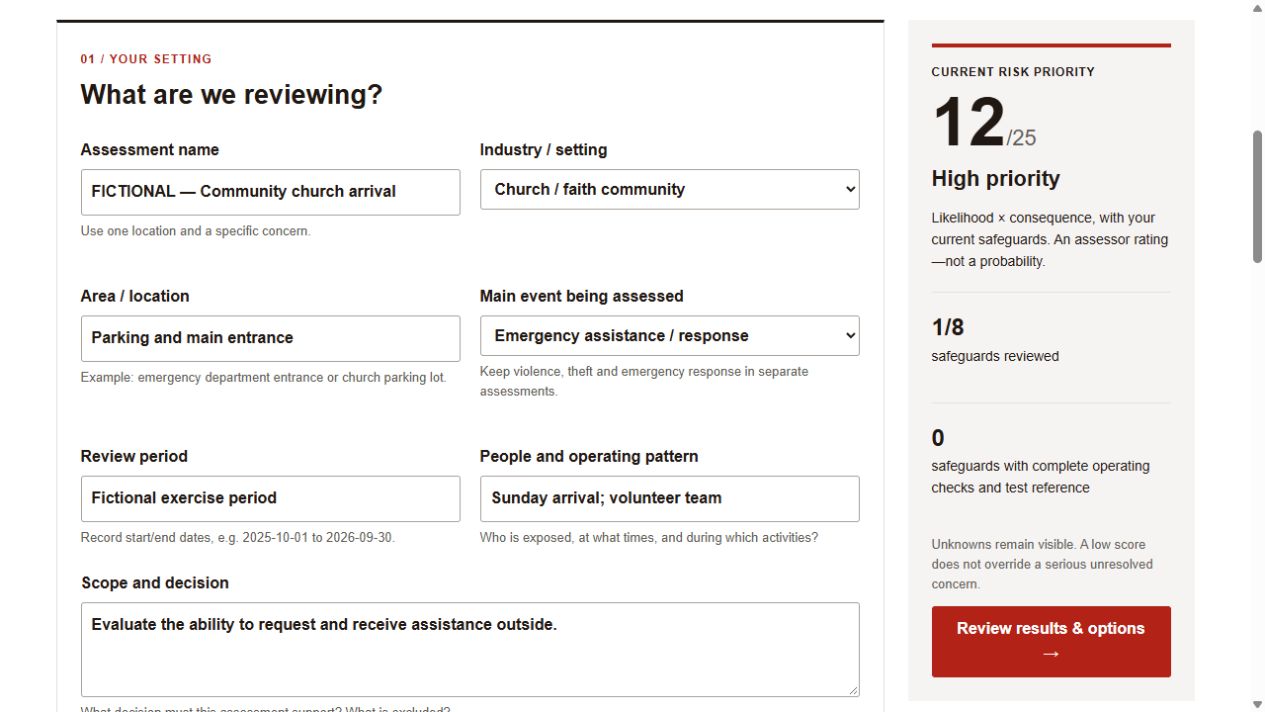
Guided questions explain what to record and how to distinguish observations, verified facts, and professional judgment.
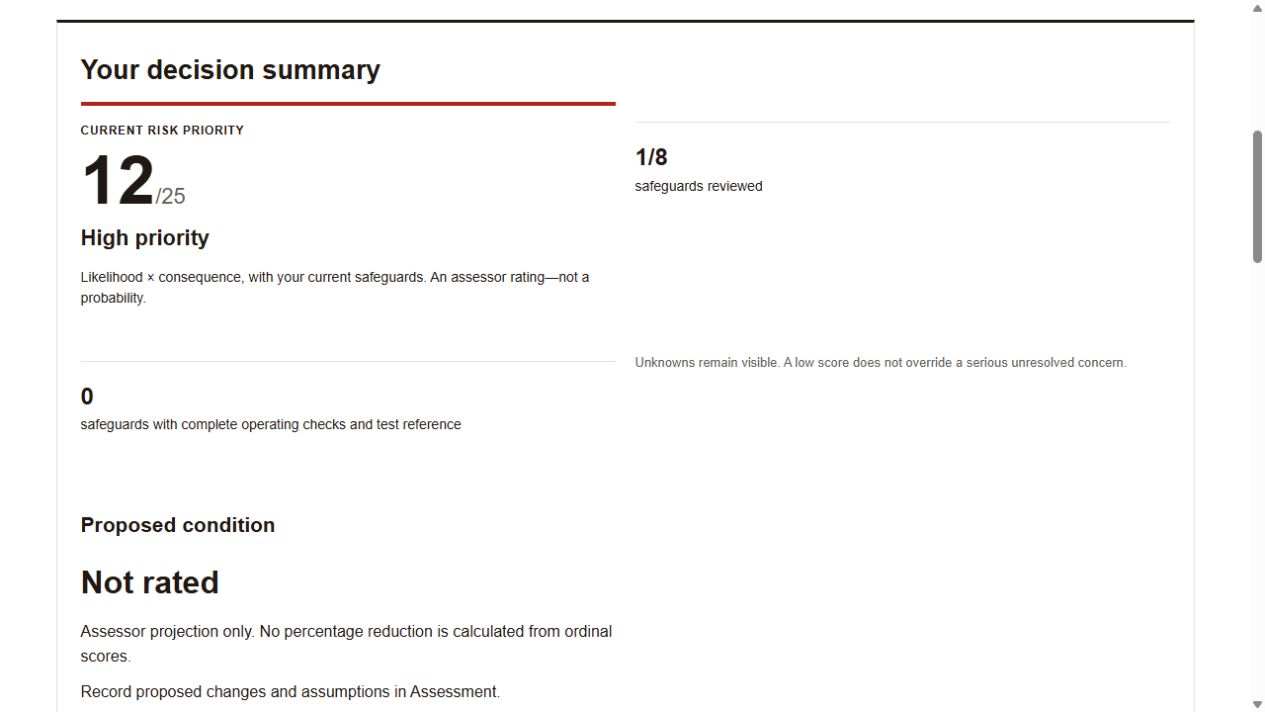
A clear summary separates the current risk priority, proposed conditions, operating gaps, and unanswered questions.
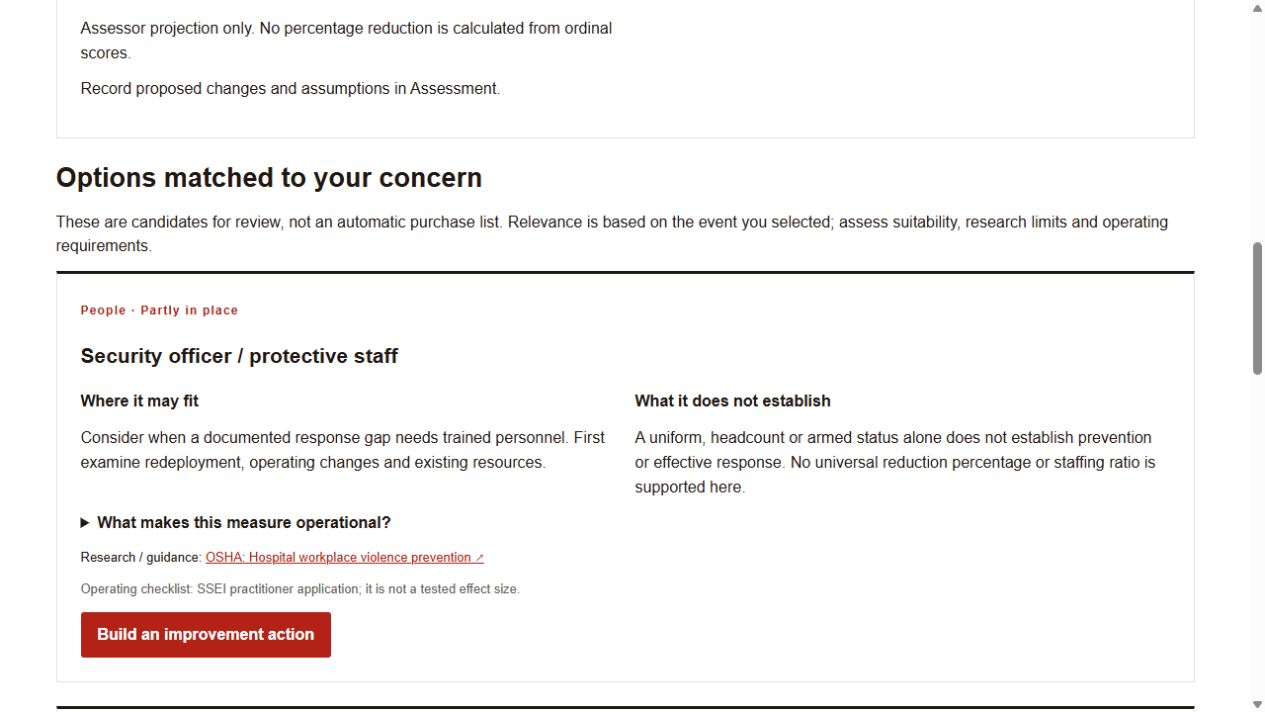
Candidate measures are linked to documented conditions and remain subject to assessor review and site-specific checks.
The tool supports professional judgment. It does not establish a validated overall risk score or prove a percentage reduction in risk. The assessment scope and deliverables are agreed with you before work begins.
SSEI’s approach draws on frontline security work, senior healthcare security leadership, investigations, and installation and integration experience.
That combination helps us examine both the proposed solution and the work around it: who uses it, who responds, who maintains it, and how it supports your mission.
Our experience and qualifications →What problem does it solve?
Who will make it work?
How will we know it helped?
Discuss your concerns, setting, existing information, and the decision you need to make. Agree on scope, responsibilities, and fees.
Examine the agreed areas, identify information gaps, and compare workable options. A procedure or device may need testing before its performance is assumed.
Review the recommendations with you, establish next steps, and identify the implementation or training support required.
Before investing in metal detectors or passive weapons detection, define the problem you need to address and how screening will work in your setting. SSEI helps connect equipment decisions to trained people, written procedures, and useful records.
What is the system designed to detect? What do its settings change, and what may pass without an alert? Review manufacturer guidance and validate the intended configuration in your environment, including how bags and everyday items are handled.
Who responds? How are bags handled, secondary screening or re-scanning performed, and an item of concern evaluated? Define the steps for resolving an alert, escalating a concern, and making an entry decision before staff face those decisions at the door.
Written standard operating procedures should explain roles, decision points, approved exceptions, documentation, and supervisor involvement. Train and practice the process so decisions follow an established policy rather than changing from person to person or shift to shift.
Which events does the device record automatically, and what must staff document? Decide whether you need screening counts, alerts, resolution outcomes, items found, wait times, or incident reports. Define access, retention, and review responsibilities, and use the information to improve the operation.
The deliverable is a workable screening process: documented requirements, understood limitations, clear response procedures, trained staff, and measures suited to your operation.
Discuss your screening process →SSEI earns income from firearms sales. SSEI does not receive vendor commissions or referral fees. Consulting recommendations focus on your needs, the agreed scope, and whether the expected benefit justifies the investment.
Executive protection involves much more than standing beside someone. Advance work means understanding the concern, evaluating the setting, preparing the team, and planning how to avoid or manage disruption.
Our founder’s experience leading protective teams informs SSEI’s consulting approach: examine the details early, clarify responsibilities, and prepare before a problem develops. The objective is an uneventful day for the people in your care.
The experience behind the approach →Tell us about your people, your place, and what you want to improve.