SSEI Training & Development

Prepared people.
Practical skills.
A plan that works.

We help organizations and individuals connect training to the responsibilities they actually have. Start with your purpose, practice the decisions that matter, and leave knowing what to improve next.

Start with the work people need to do.

A useful session answers three questions: What are we trying to protect? What should each person do? How will we know the training helped? SSEI connects those answers to your setting, procedures and available resources.

Awareness & de-escalation

For staff, volunteers and everyday life.

Recognize changes, check assumptions, listen, communicate boundaries and know when to disengage or call for help.

Purpose: A common language for observations and a practiced response to an everyday concern.

Church Safety Ministry development

For leaders, greeters and safety teams.

Connect hospitality, team roles, communications, safeguarding and emergency planning to the mission of the congregation.

Purpose: A training roadmap with responsibilities, practice priorities and follow-up actions.

School & workplace preparedness

For administrators, employees and response teams.

Discuss active-threat preparedness and other emergencies in the setting where people work. Build in questions, role clarity and planned exercises.

Purpose: People understand their part in the approved response plan and where to get help.

Healthcare violence prevention

For frontline staff, security and leaders.

Work through respectful communication, reporting, escalation and coordination with the people responsible for care and security.

Purpose: Clearer handoffs and a list of procedure, resource or practice gaps to address.

Team communications & scenario practice

For organizations with a plan that needs practice.

Rehearse briefings, radio messages, leadership notifications and responder handoffs through facilitated discussions and controlled exercises.

Purpose: An observed performance record and an action list with owners and review dates.

Firearms safety & personal protection

For individuals and approved team roles.

Basic safe handling, Maryland HQL and Wear and Carry training, and instructor-led refresher or qualification sessions suited to the agreed purpose.

Purpose: Documented course completion or qualification results, with further practice needs identified.

Wear and Carry & personal protection details →
Make the session fit the people.

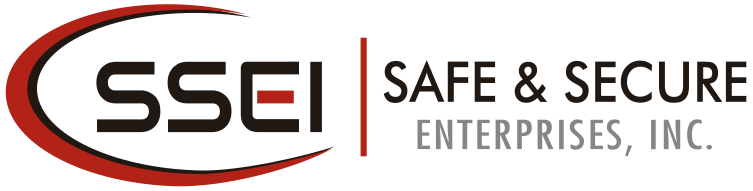
SSEI classroom and outdoor range instruction

Training can begin with a short awareness briefing, grow into a focused workshop, or form part of an ongoing team-development plan. We agree the audience, objectives, format and expected results before scheduling.

  • Briefings: a focused introduction for a staff meeting or community group.
  • Workshops: discussion, questions and relevant practice.
  • Team development: a sequence of meetings, procedure reviews and exercises.
  • Individual courses: the curriculum and completion requirements listed for that class.

Topics include situational awareness, de-escalation and civilian active-threat preparedness. ALICE instruction is available for schools that subscribe to ALICE; confirm eligibility and scope with SSEI.

Instructor background and qualifications →

Build a Safety Ministry that supports worship.

A Safety Ministry begins with service: helping people worship in a welcoming, prepared environment. SSEI helps leaders and volunteers connect hospitality, awareness, respectful communication, medical support and emergency coordination to clear responsibilities. Training fits your congregation, shared space or campus, and the experience of the people serving.

Most of the work happens in ordinary moments: answering a question, noticing a concern, making a clear handoff and getting the right help. Every session should produce something useful for the next service.

  1. Establish the foundation

    Discuss the ministry’s purpose, leadership, roles and facility responsibilities.

    Take away: a role list and priorities for written instructions.

  2. Practice awareness and communication

    Use a shared observation framework, respectful communication and a short discussion scenario.

    Take away: agreed reporting language and procedure questions to resolve.

  3. Coordinate emergency support

    Clarify who calls for assistance, who meets responders and how the team supports trained medical personnel.

    Take away: a responsibility map and a plan for appropriate medical training.

  4. Connect safeguarding and follow-through

    Review approved children’s ministry procedures, handoffs and reunification planning with the responsible leaders.

    Take away: an improvement list, owners and dates for practice.

Build further sessions around your priorities, including emergency plans, refresher training and leadership development. The sequence and pace are agreed with your organization.

Firearms qualification is one part of readiness.

SSEI offers firearms safety and permit-related training alongside organization-specific refresher planning. A shooting score documents performance on a particular course. It does not, by itself, establish judgment, team readiness or authority to serve in an armed role.

Wear and Carry & personal protection

Explore training for responsible carry, situational awareness, conflict avoidance and home preparedness. Learn what to expect, find the right starting point and see class options.

Explore private citizen training →

For team leaders

Agree the role, applicable requirements and evaluation standard with leadership and a qualified instructor. Include safe handling, communication, decision-making responsibilities and follow-up training in the wider program.

View the free refresher sample and planning tools →

Instructor-led classroom and range components can be arranged as part of an agreed refresher program. Course details, ammunition requirements and completion criteria are confirmed for that session. A private refresher does not automatically satisfy a permit requirement or confer law-enforcement certification.

For current state requirements and official qualification forms, use the Maryland State Police firearms training page ↗.

Useful tools. Free to use.

Start a team conversation, organize a briefing or turn an exercise into an action plan. Open a worksheet, type your notes and print it or save it as a PDF. No account or email is required.

Team-development planner

Turn meeting topics into usable outputs and assigned work.

Open worksheet →

SAFE discussion card

See, Assess, Focus, Execute—practice a shared way to organize attention.

Open worksheet →

Role and briefing worksheet

Clarify the assignment, support, reporting and handoff.

Open worksheet →

Exercise and follow-up record

Define success, record observations and assign improvements.

Open worksheet →

Qualification planning worksheet

Prepare questions and document instructor-led evaluation and follow-up.

Open worksheet →

From attendance to useful follow-through.

Before training

Agree the purpose, participant roles and procedures that will guide the work. Identify access needs and the limits of the session.

During training

Make room for questions. Use appropriate practice and observe what participants can do, where instructions are unclear and what support is missing.

After training

Record the gaps, assign responsibility and plan a check of the improvement. Follow-up can include procedure revisions, coaching or another exercise.

See security consulting for help connecting training with the wider program, or read SSEI’s practical articles.

Plan your next step.

Tell SSEI who the training is for, what concerns prompted it and what you want people to do differently afterward. We will help define a suitable scope.

Read student reviews on SSEI’s USCCA profile ↗

Let’s make your next step a confident one.

Tell us about your people, your place, and what you want to improve.

Start a conversation